Pages

Thursday, March 22, 2012

Human Impact Ad Campaign


 Slogan: Too Much Car Transportation
              Should Be An Allegation
              LETS SAVE THE NATION!!

My image is showing how people are damaging the Earth without realizing it. The guy is holding the Earth in the palm of his hands noticing how car is very effective to the Earth. The pieces are falling down from the Earth breaking apart. The band-aid represents how some people are trying to fix it. Because not everyone is destroying the Earth.


Wednesday, March 7, 2012

The Brooklyn Paper

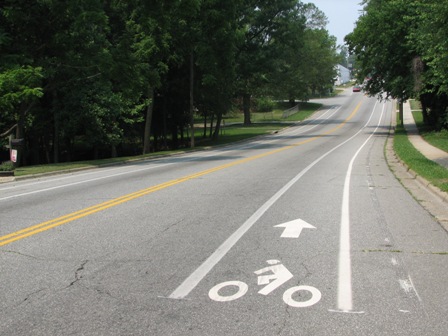
     The Brooklyn Paper is about the government spending over 140,000 on legal fees to defend Prospect Park West bike lane. The city is against this. They argued about about the bike lane turned the peaceful street into a danger zone for pedestrians and demanded it be removed. The government tried to make it seem more successful than it really is.

     This article was kinda of confusing. But i do think that they should reduced cars and have more bikes. This is because it is a safer way for whomever is riding their bikes. And always because you won't be in the same lane was the vehicles.

Bike lane

Friday, February 3, 2012

This week in science #8


  This week in science we were dissecting animals. Of course we were in groups but as partners. My partner & I were dissecting a crayfish. We looked at the crayfish nine different views. As shown in picture one that is called the Dorsal View. Dorsal view is the upper part of the organ. Ventral view is the opposite. It's looking at its stomach. The Anterior of the crayfish is below its eyes. They are able to survive in all bodies of water expect the oceans. There bodies are not designed well to deal with saltwater habitats. Also, my partner and I took pictures of the crayfish internal and external anatomy. 
  This week in science I learned a lot. I learned how to dissect a crayfish. I always learned what dorsal, ventral view was. I also learned what type of environment the cray can survive in, its's adaption. Where the anterior is located. I never looked at crayfish closed up or never dissect any animals. So everything to me was new. 

Monday, January 23, 2012

This month is science #7

       This week in science, we were placed in groups to create a power point on Google docs. Each member in the group had to create at least 2-3 slides about the Hawaiian tropical rain-forest. For example some of the slides would be the location, landforms, climate and animals that live in the rain-forest. Each member had to pick a different animal and do like a food chain. We also create a slide for the before and after climate. In 100,00 years we said that the Hawaiian tropical rain-forest will be cold. Then we had to draw an imaginary animal that we think will live in the after climate. Then we organize the slide, and wrote speaker note for each slide because we had to create a screen cast.
     This week in science, I learned what a biome is. A biome is a large naturally occurring community of flora and fauna occupying a major habitat. Another thing I learned was how to make a screen cast, that was a ha-ha moment for my group :). Also, I learned that about the different types of animals that can be found in the Hawaiian Tropical Rain-forest. My group worked very well together because we chose one person to speak for the screen cast and everyone did their slide. I learned that there's more than one rain-forest in Hawaii.
This is a flower that can be found in the Hawaiian Tropical Rain-Forest.

Monday, December 19, 2011

Classification Challenge

 This is a Sea Turtle.

 Sea turtles are reptiles. They have lungs and breathe air and they are cold-blooded. They eat sea grass, jellyfish and small fishes. Sea turtles have large sturdy shell and they live in almost every ocean basin throughout the world. They nest on tropical and subtropical beaches. They migrate long distance to feed. Sea turtles have been on earth for more than 100 million years. The life cycle of a sea turtle starts when a female lays its eggs on a nesting beach, usually in the tropics. The baby sea turtles emerge from the eggs and scramble towards the water. They never get to interact with their parents.  It is hard to differentiate between male and female sea turtles due to the similarities in size. The way you can identify them is that males have a long tail as this is where the reproductive organs are located.


Kingdom- Animalia (means it's an animal)
Phlyum- Chordata (means it has a backbone)
Class- Reptilia (reptiles)
Order- Testudines
Family-  Cheloniidae

Genus-  Chelonia
Species-  mydas


Monday, December 12, 2011

Cricket Investigation

Question: Do crickets prefer fruit or vegetables?
Hypothesis: If I give a cricket a choice of fruit or vegetables, then I think it will prefer fruit because when we observed them in class there was apple in the glass container. 

Background Research:
" Chopped apples and celery"
Crickets are some what related to grasshoppers. Crickets need a good diet otherwise they tend to feed on each other. They need a good supply of water. They are omnivores and scavengers feeding on organic materials. They live under rocks and logs in meadows, postures and along roadsides. Their predators are spiders, some wasps ground beetles, birds, small rodents and lizards. They are brown to black and the females are larger than males. There front wing varying in length, covering half to entire abdomen. A cricket antennae is about as long as distance from head to end of abdomen. There wings held flat over their body. They communicate with others mainly by sound, scent and touch. Hind wings folded and hidden under leathery front wings. To attract females, males produce a sound made by rubbing their fore wings against each other. The resulting chirping sound is picked up by the female's ears on her front legs. The chirp sounds are different for each species so that individuals can find their own species.

Explanation of Data:
 First I got a tank with chopped apples on one side and chopped celery on the other. Then I used my phone for a stopwatch and timed the crickets for 2mins. I did four trials and every 30secs I recorded their behavior. For two trials I kept the lid on and for the last two trials I took the lid off to see if that would change their behavior. 

 
My data table.
 Conclusion:
 For my cricket investigation I did four trials of 2mins each. The crickets stayed on the side with the chopped apples the most. I predicted that the crickets will prefer fruits. According to my data my hypothesis was correct. I learned that the crickets gets jumpy and active when the lid is open.

Friday, December 9, 2011

This week in science #6.

This week in science we did Cricket Investigation Day 1. We researched 10 or more things about what they need to survive. Then we wrote a testable question according to the information we collected. Then it was Data Day: Crickets. We were placed in groups. Each group were given four different type of methods that we had to use while we observed the crickets behavior. Finally, we had a mission challenge "Dichotomous Keys." Six of us had to take one side of our shoes off, I was one of them, so david can demonstrate what the dichotomous key was. Then we had to create our own dichotomous keys using six different flavors of jelly beans. There was two different type, one " Flowchart Style" and "List Style." 

"Different Flavors of Jelly Beans" We used a chart like this to name the flavors while doing the Dichotomous Keys.
This week in science I learned a couple of things. I learned facts about crickets. I never observed crickets before, so everything about them was new to me. Then I learned the two different types of Dichotomous Keys. The flowchart was the easiest and the list style was a little more challenging. 
" Flowchart Style" 
" List Style"